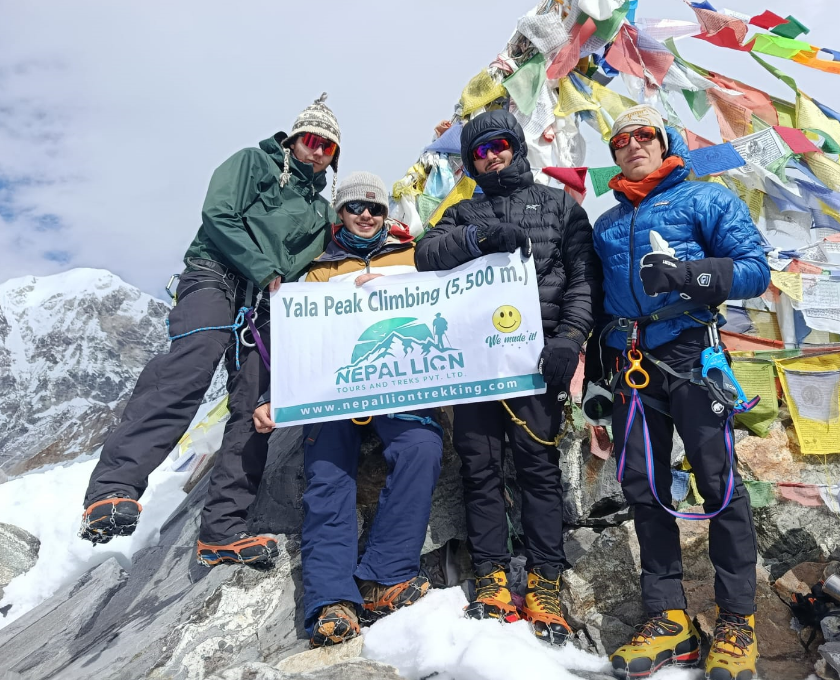


Nepal is home to eight of the world's 14 highest mountains and offers some of the finest peak climbing experiences on Earth. Nepal Lion Treks organises guided climbing expeditions on the country's best trekking peaks — ranging from beginner-friendly summits at 5,700 m to challenging alpine ascents above 6,400 m. Whether you are an adventure traveller taking your first steps into mountaineering or an experienced climber seeking a technical Himalayan challenge, Nepal Lion Treks provides certified ITHM guides, full logistics support, and personalised itineraries for every peak.
Peak climbing in Nepal refers to guided ascents of officially designated trekking peaks — mountains below 7,000 m that require basic to intermediate mountaineering skills rather than full high-altitude expedition logistics. Nepal's Department of Tourism classifies 33 peaks as 'trekking peaks,' most ranging from 5,500 m to 6,500 m in altitude.
Unlike Everest-class expeditions, trekking peaks are accessible to fit adventure travellers with proper training, a competent guide, and two to four weeks of time. Skills typically required include crampon use, ice-axe technique, rope management, and glacier travel — all of which Nepal Lion Treks guides teach before summit day.
|
Peak |
Altitude |
Region |
Difficulty |
Duration |
|
Island Peak |
6,189 m |
Everest / Khumbu |
Moderate |
18–20 days |
|
Mera Peak |
6,476 m |
Everest / Hinku |
Moderate |
18–22 days |
|
Lobuche East |
6,119 m |
Everest / Khumbu |
Challenging |
18–20 days |
|
Pisang Peak |
6,091 m |
Annapurna |
Moderate |
16–18 days |
|
Yala Peak |
5,732 m |
Langtang |
Easy |
10–12 days |
Island Peak, locally known as Imja Tse, is Nepal's single most popular trekking peak and the ideal first Himalayan summit for adventure trekkers. Situated in the Khumbu region near Chhukung, the peak earned its name from the way it appears as a rocky island surrounded by glaciers when viewed from Dingboche.
|
Altitude |
6,189 m (20,305 ft) |
|
Region |
Everest / Khumbu, Solukhumbu District |
|
Difficulty |
Moderate — suitable for fit beginners with guide training |
|
Best Seasons |
Spring (March–May) | Autumn (September–November) |
|
Permit Required |
NMA Trekking Peak Permit + Sagarmatha NP Entry |
|
Summit Views |
Everest, Lhotse, Nuptse, Ama Dablam, Makalu |
|
Combined With |
Everest Base Camp Trek |
Mera Peak is the highest officially designated trekking peak in Nepal at 6,476 m. Located in the Hinku Valley south of the Everest region, it offers one of the most rewarding panoramic views available on a non-technical Himalayan climb — on a clear summit day, five of the world's 14 eight-thousanders are visible simultaneously.
|
Altitude |
6,476 m (21,247 ft) |
|
Region |
Hinku Valley, Solukhumbu District |
|
Difficulty |
Moderate — high altitude demands strong acclimatisation |
|
Best Seasons |
Spring (March–May) | Autumn (September–November) |
|
Permit Required |
NMA Trekking Peak Permit |
|
Summit Views |
Everest (8,849m), Makalu, Lhotse, Cho Oyu, Kanchenjunga |
|
Combined With |
Mera–Amphu Laptsa–Island Peak traverse |
Highlights:
Lobuche East is the most technical of Nepal's popular trekking peaks and serves as an excellent stepping stone toward higher Himalayan objectives. Located on the Khumbu glacier moraine just three hours from Everest Base Camp, it demands competent rope work, crampon skills, and experience on steep mixed terrain.
|
Altitude |
6,119 m (20,075 ft) |
|
Region |
Everest / Khumbu, adjacent to Everest Base Camp trail |
|
Difficulty |
Challenging — technical ridge, fixed ropes, steep ice sections |
|
Best Seasons |
Spring (March–May) | Autumn (September–November) |
|
Permit Required |
NMA Trekking Peak Permit + Sagarmatha NP Entry |
|
Summit Views |
Everest, Nuptse, Pumori, Cho Oyu, Makalu |
|
Ideal For |
Aspiring mountaineers; Everest preparation climbers |
Highlights:
Pisang Peak is the premier trekking peak in the Annapurna Conservation Area, located above the village of Pisang on the Annapurna Circuit. Its moderate climbing route and excellent views of the Annapurna massif make it a favourite for trekkers extending the classic circuit with a mountaineering experience.
|
Altitude |
6,091 m (19,983 ft) |
|
Region |
Annapurna Conservation Area, Manang District |
|
Difficulty |
Moderate — some steep snow and mixed sections |
|
Best Seasons |
Spring (March–May) | Autumn (September–November) |
|
Permit Required |
NMA Trekking Peak Permit + ACAP Entry |
|
Summit Views |
Annapurna II, III, IV, Gangapurna, Tilicho Peak, Thorong La |
|
Combined With |
Annapurna Circuit Trek |
Yala Peak in the Langtang region is widely considered the most accessible trekking peak in Nepal. Its straightforward snow route, relatively low altitude demands, and proximity to Kathmandu make it the ideal introduction to Himalayan climbing for first-timers.
|
Altitude |
5,732 m (18,806 ft) |
|
Region |
Langtang National Park, Rasuwa District |
|
Difficulty |
Easy — non-technical snow climb, no fixed ropes required |
|
Best Seasons |
Spring (March–May) | Autumn (September–November) |
|
Permit Required |
NMA Trekking Peak Permit + Langtang NP Entry |
|
Summit Views |
Shishapangma, Dorje Lakpa, Ganesh Himal, Langtang Lirung |
|
Combined With |
Langtang Valley Trek or Gosaikunda Trek |
Peak climbing in Nepal is best undertaken during two primary seasons:
Nepal Lion Treks advises against winter (December–February) and monsoon (June–August) expeditions for most trekking peaks due to extreme cold, deep snow, and unpredictable weather. Exceptions include select winter ascents for experienced alpinists — contact our team for custom planning.
Peak climbing in Nepal is categorised by technical difficulty. Nepal Lion Treks provides pre-climb orientation and practical training sessions at base camp before summit attempts on all peaks.
|
Level |
Peaks |
Skills Required |
|
Easy |
Yala Peak |
General fitness, basic snow walking, crampons on flat terrain |
|
Moderate |
Island Peak, Mera Peak, Pisang Peak |
Crampon use, ice axe arrest, basic rope skills, glacier travel |
|
Challenging |
Lobuche East |
Technical rope work, steep ice (45°+), fixed rope ascending, prior alpine experience |
Nepal Lion Treks supplies technical climbing gear (harness, crampons, ice axe, ropes, helmets) as part of expedition packages. Clients should bring personal mountaineering clothing. The full gear list is provided on booking.
Technical Climbing Gear (Provided by Nepal Lion Treks):
Personal Clothing & Equipment (Client Responsibility):
All trekking peaks in Nepal require a permit from the Nepal Mountaineering Association (NMA). Nepal Lion Treks handles all permit arrangements as part of the expedition package — clients do not need to apply independently.
|
Peak |
NMA Permit Fee (USD) |
Additional Permits |
|
Island Peak |
$250 per person |
Sagarmatha NP entry, Khumbu Pasang Lhamu Rural Municipality fee |
|
Mera Peak |
$250 per person |
Makalu Barun NP (if via Amphu Laptsa) |
|
Lobuche East |
$250 per person |
Sagarmatha NP entry |
|
Pisang Peak |
$250 per person |
ACAP permit, Manang entry |
|
Yala Peak |
$250 per person |
Langtang NP entry |
Q1: What is the easiest peak to climb in Nepal?
Yala Peak (5,732 m) in the Langtang region is the easiest trekking peak in Nepal. It has a non-technical snow route, requires no fixed ropes, and is ideal for first-time Himalayan climbers. The climb can be completed as part of a 10–12 day Langtang Valley trek.
Q2: How fit do I need to be for peak climbing in Nepal?
You should be able to trek 6–8 hours per day with a 10–12 kg pack at altitudes above 4,000 m. For moderate peaks like Island Peak or Mera Peak, four to six months of cardiovascular training (hiking, running, cycling) before your trip is recommended. Nepal Lion Treks can advise on a personalised training plan.
Q3: Do I need prior climbing experience for Island Peak?
Prior technical climbing experience is not mandatory for Island Peak, but basic mountaineering training is essential. Nepal Lion Treks provides a one-day pre-climb training session at Island Peak base camp covering crampon use, ice axe arrest, and rope technique. Climbers with prior snow hiking experience perform best.
Q4: What is the best time of year to climb Mera Peak?
The best time to climb Mera Peak is October–November (autumn) for clear skies and stable weather, or April–May (spring) for longer summit-day daylight. Mera Peak can also be attempted in late September and early March. Nepal Lion Treks departs are scheduled around optimal weather windows.
Q5: How much does peak climbing in Nepal cost?
Peak climbing costs vary by peak, group size, and services included. As a guide: Island Peak climbing packages with Nepal Lion Treks start from approximately USD 1,400–1,800 per person (including guide, permit, accommodation, meals, and domestic flights). Mera Peak packages start from USD 1,600–2,000. Contact Nepal Lion Treks for a detailed quote tailored to your group.
Q6: Is altitude sickness a risk on Nepal trekking peaks?
Yes. All Nepal trekking peaks exceed 5,700 m and altitude-related illness is a genuine risk. Nepal Lion Treks itineraries follow acclimatisation protocols recommended by the Wilderness Medical Society: gradual ascent, rest days at key altitudes, and monitoring for AMS symptoms. Guides carry supplemental oxygen and a portable altitude chamber (Gamow bag) on all expeditions above 6,000 m.
Q7: Can I combine peak climbing with the Everest Base Camp trek?
Yes — Island Peak and Lobuche East are routinely combined with the Everest Base Camp (EBC) trek in a single 20–22 day itinerary. This is one of Nepal Lion Treks' most popular expedition combinations, as climbers are already well acclimatised after reaching EBC at 5,364 m.
Q8: What permits do I need for trekking peaks in Nepal?
You need an NMA (Nepal Mountaineering Association) trekking peak permit, which costs USD 250 per person for most peaks in 2026/2027. Additional permits — such as Sagarmatha National Park entry (for Khumbu peaks) or ACAP permits (for Annapurna) — are also required. Nepal Lion Treks arranges all permits on your behalf.
Peak climbing in Nepal remains one of the world's most rewarding mountain adventures — combining high-altitude achievement, extraordinary Himalayan scenery, and deep engagement with Sherpa culture. From the beginner-friendly slopes of Yala Peak to the technical ridges of Lobuche East, Nepal Lion Treks offers expert-guided expeditions across all difficulty levels.
Contact Nepal Lion Treks today to plan your 2026 or 2027 peak climbing expedition. Our team will match you with the right peak, design your acclimatisation itinerary, and handle every permit, porter, and logistics detail — so you can focus entirely on reaching your summit.