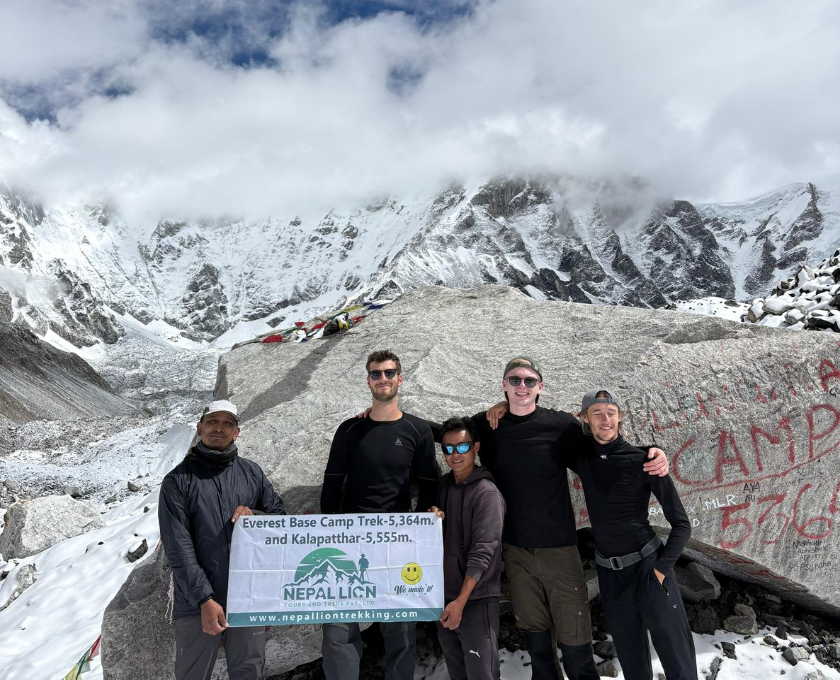
Everest Base Camp Trek- 14 Days
Trip Facts
Group size
1-20+
Duration
14 Days
Trip Mode
Aeroplane/Private Vehicle
Level of difficulty
Moderate
Max. Altitude:
5364m
Best Season
Sep-Nov/Late Feb-May
Accommodation
Tea Houses/Lodges
Start/End
Kathmandu
Trip Highlights
- Thrilling scenic flight from Kathmandu to Lukla.
- Exploration of Sherpa villages like Namche Bazaar and Tengboche.
- Acclimatization with panoramic Everest views from Everest View Hotel.
- Trekking through Sagarmatha National Park (UNESCO World Heritage Site).
- Visit to Tengboche Monastery with stunning mountain vistas.
- Sunrise views of Everest and peaks from Kalapatthar (5,545 m).
- Reaching Everest Base Camp (5,364 m), a mountaineering milestone.
- Diverse landscapes: alpine forests, rivers, and high-altitude terrain.
- Authentic teahouse trekking experience and local meals.
- Insights into Tibetan Buddhist culture with monasteries and prayer flags.
Overview
The Everest Base Camp trek, often referred to as EBC trek, is a mesmerizing journey that takes you to the foot of the tallest mountain on Earth. Nestled in the heart of the Khumbu region in Nepal, this trek is a testament to human endurance and the breathtaking beauty of the Himalayas.
Mount Everest, the highest mountain in the world, and everyone wants to conquer it. The 14-day EBC trek is among the most fascinating ones. Trekkers step into colorful Kathmandu with culture shock before flying to Lukla, which serves as the entry point to the mountain. This implies that every day on the trail is a combination of a physical test and an exploration of the cultural value systems of the people occupying the trail. Covering everything from tropical rainforests and suspension bridges to snowy paths to the base of the highest mountain of the world every single step is a sight for sore eyes as well as learning about Sherpa people and their life. All these includes itineraries, permits for the trekkers to get through, accommodation, meals, guide services are well provided for thus the trekkers enjoy their time out.
The not to miss attractions of the trek include Namche Bazaar, Tengboche Monastery and the Everest Base Camp. The correct acclimatization process is incorporated into the schedule since the trekking programs' main goal is the opportunity to slowly ascend to that height and enjoy the travel without any health issues. This ranges from viewing sunrise at Kala Patthar over Mount Everest to actions and chit-chat with a Sherpa all count for the journey's impact. This trek is more than going to the place; it is a process, the people which you cross the way, the time which you spend and the moments which you will never forget.
Everest Base Camp Trek Cost
When it comes to the topic of planning for a trek, one of the first things that any trekker will care about is the expenses carried out. The cost of trek to the Everest Base Camp depends, as little as $1,200, but as much as $5,000. One has to be very careful to look for a package that will be economic while at the same time will offer a safe ride as well as fun. These expenses usually include fees such as permits, accommodation, meals during the trip and hiring of tour guides. The luxury level packages provide more comfort or equipment, and services or better accommodation and equipment, and the level offers some compromise and takes a bit of work. Finally, securing that which can be afforded comfortably in a shared resource combination and that which is helpful for the venture is typical.
Choosing the Right Package
Selecting the right package for your Everest Base Camp trek is very vital so that you will enjoy your trek fully. They may combine food and drink, accommodation, permits, and a professional guide who can show you around as you get used to the terrain. Therefore, it is necessary to make research on what company to hire in order that the whole process would be appropriate. A good starting point is to read reviews, ratings, and testimonials published by other trekkers who worked with a given company before. More than anything else, laying emphasis on the orderly and safer trek will add on to the overall satisfaction and memory of the trekker while on the journey through the demanding Everest Base Camp.
The Everest Base Camp Trek Itinerary
A correct schedule is highly recommended in order to make the most out of this amazing trek and avoid altitude sickness issues. The 14-day trek commences with arrival at Kathmandu and subsequent days of rest and familiarisation with the Sherpa country before joining the flight to Lukla, the gateway to the Mount Everest Region. During this, trekkers get opportune to trail village settlements like Phakding and Namche Bazaar, moving through forests and crossing steel suspension bridges over the Dudh Koshi River. These hikes direct experience of amazing views coupled with physically distressing climbs of steep hills with a weight in rucksack to offer; admiration of close ranges of the world famous Tengboche Monastery and adorable cultural villages of Dingboche and Lobuche form the highlights of each day's hikes.
Gradually when you move ahead, the geography changes to high altitude views of the majestic Himalayas. This has vital acclimatization days as in Namche Bazaar and Dingboche which gives your body a chance of adapting to the altitude. Taking a thrilling climb followed by meeting the locals, visiting the incredible Buddhist monastery, summiting the base camp, witnessing the awe-inspiring sunrise on the snowy mountain peak of Kala Patthar. The way back, retracing the steps to Lukla, provides ample time for contemplation of the mind-blowing experience. Every day is a mix of exercising and discovery of the local traditions and languages – something one cannot get anywhere other than in the middle of the Himalayas.
Understanding Altitude: Everest Base Camp Height and Altitude
Weather conditions are quite an important aspect to be contemplated when on a trek at the EBC journey. Located at a staggering 5,364 metres (17,598 feet) the base camp is at an altitude that should cause worry on the onset of altitude sickness. For the human body, there is a process of acclimatisation by which the body gradually gets used to the up and coming circumstances of high altitudes which is characterised by lower levels of oxygen in your blood.
In an effort to minimize altitude sickness, it is most advised to spend at least a couple of days resting under challenging altitudes like Namche Bazaar and Dingboche. These stops help your body acclimate to the thinning air and, thus, make the trip as safe and fun as it can be. By the time that a person arrives, they should already be used to the altitude which enables a clear vision and proper appreciation of the beautiful scenery as well as the achievement.
Mapping Your Everest Adventure
Planning out your trek to Everest is essential in organizing the whole trip. A detailed map is your reliable friend, which will always keep you from getting lost anywhere whether; it is a dense forest, rough roads or icy glaze. A good map helps you know the direction to take or even have a glimpse of the geography of the surrounding areas. It's not merely an exercise that allows the wrong way finding, it brings a sense of the location, of the place, of the regions one is navigating through – the Himalayas.
As for safety many trekkers also take along with them their GPS devices for extra protection and accuracy. These devices can be handy when you are in a confusing trail and you want to be confident you are going in the right direction. Both will only require a map and compass or the GPS system to guide you through the whole trip and be ready for a fantastic experience.
Nepal Everest: Beyond The Trek
The EBC trek is far more than just a physically adventurous expedition; tourists will be able to engage in Nepal's vibrant culture. During the walk, you can also have an excellent chance to familiarize with the traditions of the local Sherpa people. This is made possible by the exploration of the movement through ancient monasteries where one might be privileged to see ages old rituals and practices. In the process you also have the opportunity to enjoy the Nepali local foods and get to taste the Nepali cuisines. These cultural encounters give so much more meaning to the adventure and extraordinary beauty of trekking that it itself becomes much more than just the gorgeous scenery.
My Everest Trip: Personal Reflections
The journey to EBC was indeed life-changing. The trek was exhausting and challenging in all ways possible, but everything that felt like pushing a button was accompanied by what has to be one of the most beautiful sights in the world – the Himalayas. Whether walking through the thick of tall trees and fording streams or hiking over sharp rocks and pausing in front of icy glaciers, everything was awe-inspiring. The destination wasn't limited to getting to the Base Camp; it was about all the fun with other trekking buddies and the hospitality of the Sherpas. I will forever cherish the view of the first rays of sun winking over the great peaks of the world through the vantage point of Kala Patthar. This was a journey and it will not be wrong to term it an adventurous one because firstly I will remember it and secondly it is memorable.
Everest Trekking in Nepal: A Growing Trend
The adventure of trekking in the mighty Everest region of Nepal has also tremendously increased year after year. The desire to get to the base of the highest mountain in the world pulls in travelers from all over the globe. This trek is definitely one of the kind because of the challenge that the Himalayas present and the beauty that is found in them. With each year seeing more and more trekkers take up this challenge, the Nepalese government has followed suit in trying to ensure responsible tourism. Both of their projects' objectives are to protect the natural and cultural resources in the area, so that the future generations can also be able to appreciate such magnificent sceneries.
For these endeavors, there has been put in place that would reduce the impacts on the environment and on the communities. These are preserving the standard state of the trekking trails, endorsing responsible use and visitation, and guaranteeing that the coming of increasing volume of tourists is not detrimental to the environment while positively impacting the external economy of the area. By such approaches the ever famous Everest trekking maintains the life fulfilling experience together with the environment and culture of the region.
Itinerary
At the very point of arrival at Tribhuvan International Airport (TIA), one of our assigned representatives will pick you up and transfer you to your hotel. A quick refreshment with lunch, and you will meet your guide for a trip introduction and make some further preparations. The afternoon is free for you; therefore, you can stroll around the nearby places and local markets.
Location:
Kathmandu
Altitude Different:
1,400M
Accommodation:
Hotel in Kathmandu
The second day marks the Kathmandu Valley Tour, during which you will spend the day admiring the city's world heritage sites, such as Swayambhunath (Monkey Temple), The Pashupatinath Temple, Patan Durbar Square, etc. You can explore the various shrines, learn about their history and significance, observe rituals, shop for Tibetan handicrafts, and visit for a night meal.
Location:
Kathmandu
Altitude Different:
1,400M
Accommodation:
Hotel in Kathmandu
Lukla is a gateway destination for the Everest region trek. After an early breakfast, we will transfer you to the domestic air terminal in Kathmandu for an early morning flight to Lukla Airport (2,860 m/ 9,400 ft). The flight takes approximately 40 minutes and includes breathtaking views of Kathmandu city and the surrounding mountains.
As you arrive in Lukla, you'll meet our other crew members. After some packing and arrangements, you'll start your trek to Phakding. However, it is a short hike today. If you're interested, you can take a side trip to the nearby monastery, Phakding Gompa, with a warm dinner overnight at Phakding.
Location:
Phakding
Duration:
3 to 4 hours
Meal:
Breakfast, Lunch & Dinner
Altitude Different:
2,610 meters
Accommodation:
Tea house / lodge
You'll trek up through a beautiful pine forest along the Dudh Koshi River over many suspension bridges, including the famous Hillary Suspension Bridge. On the way, you can view Mt. Thamserku (6618 m) glistening in the sunlight. You trek through the settlements of Benkar, Chumoa, and Monjo before reaching the Sagarmatha National Park check post at Jorsalle, the last village in the valley before Namche Bazaar. The trail climbs up through forest and over more bridges until you reach the confluence of the Dudh Koshi and Bhote Koshi rivers. Here you will begin a final steep ascent of about two hours to Namche and catch the first sight of Mt. Everest peering over the Lhotse-Nuptse ridge. You'll stop at Chautara to admire the view before reaching Namche Bazaar, a gateway to Mt. Everest and the main trading center of the region. You will stay overnight in Namche Bazaar.
Location:
Namche Bazaar
Duration:
3 to 4 hours
Meal:
Breakfast, Lunch & Dinner
Altitude Different:
2,610 meters
Accommodation:
Tea house / lodge
Namche Bazaar is also the area's central hub; after five days of trekking, everyone will be spent, so a rest day is nice here before carrying on. Namche Bazaar, next to being a resting spot, is a cultural center. The body must be able to accustom itself to changes in climate, pressure, altitude, surroundings, etc. At the same time, traveling to the base camp or while at the base camp we can trek for a short while to the famous Hotel Everest View for a look at Mount Everest and adjoining mountains. You will be able to see such essential mountaineers’ memorials as Tenzing Norgay Sherpa’s historical monument and go to monasteries located nearby. Namche has its own shopping market where trekkers can get fantastic memories; in addition, the village also has a couple of engaging museums that give information about the life and culture of the Sherpa Nepalese.
In the evening, we will be back to our lodge in Namche. Have a substantial supper and chat with other travelers with whom you have just spent the day. The lodge is welcoming, cosy and comfortable so we can relax before targeting a number of harsh ascents in the following days. So, this resting day in Namche is a beautiful novelty and not mere idle time, and it enriches, therefore is not exclusion from the travelling process but a part of it.
Location:
Namche Bazaar
Meal:
Breakfast, Lunch & Dinner
Altitude Different:
3,880 meters
Accommodation:
Tea house / lodge
Later we start again for trekking after having our breakfast for the day. On departure we get the first views of some of the giants of the world – Mount Everest, Nuptse, Lhotse, Ama Dablam and Thamserku. Any snowy and towering mountains painted against the sky cause us to marvel and look forward to. Our trail takes us to Sansa which is the chief trail head towards Gokyo and the Everest Base Camp. Following this we move upwards to Phunki Thunga where we will halt for lunch. Here we sit down to eat our packed lunch, take a nap and appreciate the scenery before we continue with the exercise in the next section of the trek.
After the lunch it’s stiff upward uphill till Tengboche. This is rather exhausting climb, but the view and the thought that we are going to spend the night in Tengboche encourages us. Finally, we get admiring sceneries and satisfaction of completing a hike when we reach the top. Then, move for check-in at the local hotel so that we can recover and get back our energy. There is a very beautiful monastery here at Tengboche which we can also embrace some cultural and religious way of the locals. Tengboche is even more beautiful to spend the night because of the solitude and the stunning backdrop of the great Himalayas.
Location:
Tengboche
Duration:
5 to 6 hours
Meal:
Breakfast, Lunch & Dinner
Altitude Different:
3,860 meters
Accommodation:
Tea house / lodge
After a nourishing breakfast, head towards Dingboche, nestled in a valley surrounded by majestic peaks. The trail leads you through rhododendron forests and past many walls, creating a serene experience, while the views of Ama Dablam and the surrounding mountains are nothing short of breathtaking. Arriving in Dingboche, enjoy lunch at your lodge or a local teahouse, sampling local dishes that warm you up after the trek. The landscape becomes increasingly stark and beautiful, filled with the high-altitude flora and fauna unique to this region. Spend the evening relaxing and soaking in the tranquil atmosphere, followed by a hearty dinner as you prepare for the challenges ahead.
Location:
Dingboche
Duration:
5 to 6 hours
Meal:
Breakfast, Lunch & Dinner
Altitude Different:
4,410 meters
Accommodation:
Tea house / lodge
This is the best opportunity to get used to high altitude, get your body accustomed to it. Dingboche is quiet and is a pleasant place to wander around at will, still doing some sightseeing. Otherwise, you can choose one of the more frequently visited trekking routes to Chhukung at the altitude of 4750m. This hike take you through excellent view and good opportunity to acclimatize for the higher grounds besides exploring the Himalayan terrains. Depending if you decide to spend the day in Dingboche or take the hike to Chhukung, today is important as a acclimatization day for the higher altitudes to come.
Location:
Dingboche
Meal:
Breakfast, Lunch & Dinner
Altitude Different:
5,080 meters
Accommodation:
Tea house / lodge
After having a good stock of food for the day, we prepared to leave for the trail to Dingboche. Th voyage continues with our descent through rich woods dominated by birds' voices offering a perfect impression of a serene village called Deboche. On crossing the river, we feel a cool wind blowing at us and the general sight of water passing under the footbridge. A short but energetic steep climb leads to the Pangboche Village, that can be visited before half an hour break for lunch in tea-house.
On this side of the river, the towering Ama Dablam providing a stunning back drop and an ever present distraction for the weary hiker. There is white snow on the summit and it shines in the sun making it possible for us to have a perfect shot while on the trekking expedition. Venturing further on our journey we get to meet lovely people and beautiful places on the way up to the village.
Last of all we reach the village of Dingboche for the night where we get warm welcomes, sweet lodges to stay in. Views of the surrounding mountain at sunset are spectacular, you are surrounded by views of the oranges and pinks of the colored sky. Together with the evening, the sky becomes clear, the stars twinkle, so every night spent on the island surrounded by beautiful nature is the icing on the cake.
Location:
Lobuche
Duration:
4 to 5 hours
Meal:
Breakfast, Lunch & Dinner
Altitude Different:
4,940 meters
Accommodation:
Tea house / lodge
Today as we make our way to Gorak Shep, we will have to continue navigating through more of the lateral moraine of the Khumbu Glacier. In front of us lies the peak of the north ridge of Everest, as well as other surrounding mountains like Mt. Pumori, Mahalangur, Lingtern, Khumbutse, Nuptse are all mountain peaks in the same region. A gentle climb leads to Thangma Riju, offering a panoramic view of the towering mountains in all directions. Continuing ahead, we finally spot Kala Patthar, where we will see Mount Everest. Kala Patthar, a grey-green hill located below Mt. Everest. The name of the mountain is Pumori. Upon reaching Gorak Shep, we find ourselves encircled by towering snow-capped mountains, with the impressive Mount Everest among them. Following a short break for lunch and some rest, we proceed along the path towards Everest Base Camp. Along the route, there are numerous monuments dedicated to those who never made it back from their trip. At the base camp of Everest, the brightly colored tents of climbers trying to reach the summit contrast with the dull grey landscape. Nuptse, Khumbuste, and Pumori can be seen from this point, but not Mount Everest. We have now achieved the primary goal of our journey, and we are saving the most beautiful view for tomorrow.
Location:
Gorak Shep
Duration:
7 to 8 hours
Meal:
Breakfast, Lunch & Dinner
Altitude Different:
5,364 meters
Accommodation:
Tea house / lodge
This day marks the peak of our journey and possibly the primary purpose for travelling to Nepal. We begin at dawn to admire the breathtaking scenery of the tallest mountain on earth from Kala Patthar, observing the first rays of sunlight illuminating it in its full magnificence. It is vital to get ready early in the morning at this high altitude. The weather is consistently cold and dark, with temperatures ranging from -10 to -14 degrees Celsius, and there is always a chance of chilly winds. The surrounding peaks that we recognize are now a common sight as Everest starts to appear, rising up between the western shoulder crest and Nuptse. While climbing up to Kala Patthar, we stop at various scenic spots to rest and take pictures. After several hours of climbing, the group will get to Kala Patthar. We hurry to get to the top of a small rock formed hill; there is a pile of stones there and colorful flags. Above the summit we can take the stunning views of the overwhelming chain of snowy mountains of the Himalayan system that from one top to another stretches the numerous peaks that give us the understanding of the goal of the great efforts we make. Pictures saved on the flash drive and plenty of mental images to remember forever. It is now time to walk back to Gorak Shep for a second breakfast, as we prepare to begin our journey down to Pheriche.
Location:
Pheriche
Duration:
7 to 8 hours
Meal:
Breakfast, Lunch & Dinner
Altitude Different:
5,545 meters
Accommodation:
Tea house / lodge
The return journey retraces the original path, with rhododendron trees covering the trail. During the spring season, the pink and red rhododendron flowers brightly light up the area. We will have lunch in Pangboche or wait until we reach Phunki Tenga based on our hunger and condition. Following the crossing of the bridge over the Dudh Koshi River, the path continues along the river gorge, quickly descending through a pine forest. The route eventually leads to Sansa, the critical intersection of trails in the area. Lunch will be had at Kyangjuma (3570 m/11,710 ft). Every bite offers beautiful views of Ama Dablam, Thamserku, and Nuptse. Following our lunch break, we proceeded towards Namche Bazaar, navigating a steep and winding wooded slope. There is abundant wildlife in this area, including mountain goats, vibrant pheasants, and sightings of snow leopards. We arrive at the army camp in Namche after we pass by a Chorten. Upon arriving at our lodge, it is time for a much-deserved warm shower, a satisfying meal, and a restful night's sleep. Stay in Namche Bazaar for one night.
Location:
Namche Bazaar
Duration:
6 to 7 hours
Meal:
Breakfast, Lunch & Dinner
Altitude Different:
3,440 meters
Accommodation:
Tea house / lodge
This day involves a sharp descent along sharp rocks to start off with. The relatively flat sections of the trail are reached after crossing suspension bridges over the fast-moving Dudh Koshi River and its tributaries. The air up here is a lot warmer, and any last lingering throat groans and colds do not last very long. Now there is more time to be stunned by the unbelievable culture of these rugged, mountain-dwelling Sherpa people as we pass through the villages. Given so many prayer stones and prayer flags one can not help admitting a pretty impressive level of belief in Buddhism. In Lukla people can relax and think over the last days of the two weeks trekking: an unforgettable experience to live for many years. Overnight in Lukla.
Location:
Lukla
Duration:
6 to 7 hours
Meal:
Breakfast, Lunch & Dinner
Altitude Different:
3,440 meters
Accommodation:
Tea house / lodge
Fly back to Kathmandu in the morning, enjoying the aerial views of the stunning mountains below. Spend your last day with us enjoying the city's vibrant atmosphere, doing some last-minute shopping, or simply relaxing. Happy last dinner in the town, one more fascinating day you will remember being in Everest Base Camp. The city is an excellent place to have a contemplation and rest after visuals and feelings from the trek, which indeed makes it an ideal place to end.
Location:
Kathmandu
Duration:
35 minutes
Meal:
Breakfast & farewell Dinner
Altitude Different:
2,860 meters
Accommodation:
Hotel in Kathmandu
Price Includes
- Pick-up or Drop-off service from and to Airport (in our own vehicle)
- Pre-trek briefing In Kathmandu Nepal Lion Treks office
- Domestic flight Kathmandu / Ramechhap - Lukla - Kathmandu / Ramechhap inclusive with all taxes and transfers
- Food all along the trip(Main course:- Breakfast, Lunch and Dinner) and a cup of coffee or tea) and accommodations during the trip in hotels with family environment
- One licensed trekking guide speaking English, Chinese, Korean, Hindi, and Nepali
- Transportation, food, accommodation and insurance of Guide during the trip Down jacket, all-season sleeping bag, duffel bag and trekking map(in case if you dont have your own. Down jacket, sleeping bag and duffel bag must be returned after completion of the trip)
- Transportation, food, accommodation and insurance of Guide during the trip
- First Aid Medical Kit(Carried by the guide) Aarogya PC-303 Portable Vital Signs Monitor Device
- 1 well-experienced English-speaking assistant guide if the group size exceeds 5+ persons.
- All necessary Everest Base Camp trekking permits: Sagarmatha National Park and Trekkers' Information Management System (TIMS) fee.
- All applicable taxes are as per the government rules and regulations.
- Hotel accommodation in Kathmandu with breakfast as per the program.
- Welcome or farewell dinner in Kathmandu at a cultural restaurant(complimentary)
Price Excludes
- International Airfare
- Nepal visa (can be obtained at the airport or immigration counters at the borders: USD 25 for 15 days and USD 40 for 30 days and two passport-size photographs are required).
- Your travel and medical insurance
- Personal Expenses such as shopping, bar bills, hot shower, telephone, laundry, titbits etc
- Services not mentioned or not promised by the Agent / Agency
- Emergency expenses such as expenses on charted Flights / Helicopter
Add-ons & Options
At Nepal Lion Trekking, we have 17 years of excellent operation and decades of expertise in leading treks in Nepal. To further enhance your Everest Base Camp Trek 14 Days, we’re pleased to introduce exclusive add-ons for an even more exceptional adventure.
Pre-Trek Accommodation in Kathmandu
Start your adventure smoothly with our handpicked hotel options in Kathmandu. We take care of bookings so you can relax and prepare for your trek.
✅ Double Room: $55 per night (shared cost between two trekkers – $27.50 per person!)
✅ Single Room: $45 per night (private comfort before the trek)
(all rate include breakfast )
📍 Location: Centrally located, close to Thamel (tourist hub) for easy access to gear shops, restaurants, and cultural sites.
Porter Service – Trek Lighter, Enjoy More!
If you're interested in hiring a porter for your trek,we can also assist with booking a reliable and experience porter to Support your journey. Please contact us for current rates and availability.
Join Group Availability
Select a departure month
Select year
| Start | Finish | Availability | Price | |
|---|---|---|---|---|
| Sunday Oct 11, 2026 | Saturday Oct 24, 2026 | Trip Status Available | Starting from US$ 1,325 | |
| Saturday Oct 17, 2026 | Friday Oct 30, 2026 | Trip Status Available | Starting from US$ 1,325 | |
| Saturday Oct 24, 2026 | Friday Nov 06, 2026 | Trip Status Available | Starting from US$ 1,275 | |
| Wednesday Oct 28, 2026 | Monday Jan 26, 2026 | Trip Status Available | Starting from US$ 1,350 | |
| Saturday Oct 31, 2026 | Friday Nov 13, 2026 | Trip Status Available | Starting from US$ 1,400 | |
| Sunday Nov 01, 2026 | Saturday Nov 14, 2026 | Trip Status Available | Starting from US$ 1,325 | |
| Thursday Nov 05, 2026 | Wednesday Nov 18, 2026 | Trip Status Available | Starting from US$ 1,400 | |
| Tuesday Nov 10, 2026 | Monday Nov 23, 2026 | Trip Status Available | Starting from US$ 1,350 | |
| Tuesday Nov 17, 2026 | Monday Nov 30, 2026 | Trip Status Available | Starting from US$ 1,275 | |
| Tuesday Nov 17, 2026 | Monday Nov 30, 2026 | Trip Status Available | Starting from US$ 1,325 | |
| Saturday Nov 21, 2026 | Friday Dec 04, 2026 | Trip Status Available | Starting from US$ 1,325 | |
| Sunday Nov 22, 2026 | Saturday Dec 05, 2026 | Trip Status Available | Starting from US$ 1,200 | |
| Monday Nov 23, 2026 | Sunday Dec 06, 2026 | Trip Status Available | Starting from US$ 1,275 | |
| Friday Nov 27, 2026 | Thursday Dec 10, 2026 | Trip Status Available | Starting from US$ 1,400 | |
| Tuesday Dec 01, 2026 | Monday Dec 14, 2026 | Trip Status Available | Starting from US$ 1,400 | |
| Monday Dec 07, 2026 | Sunday Dec 20, 2026 | Trip Status Available | Starting from US$ 1,325 | |
| Saturday Dec 12, 2026 | Friday Dec 25, 2026 | Trip Status Available | Starting from US$ 1,275 | |
| Thursday Dec 17, 2026 | Wednesday Dec 30, 2026 | Trip Status Available | Starting from US$ 1,350 | |
| Tuesday Dec 22, 2026 | Monday Jan 04, 2027 | Trip Status Available | Starting from US$ 1,325 | |
| Monday Dec 28, 2026 | Sunday Jan 10, 2027 | Trip Status Available | Starting from US$ 1,275 |
If the above Everest Base Camp Trek- 14 Days
does not meet your needs, we can design individualized travel plans based on your preferences and
specifications.
MAP

Elevation Chart: Everest Base Camp Trek- 14 Days
Download
Altitude in:
FAQ's for Everest Base Camp Trek- 14 Days
General
The Everest Base Camp (EBC) Trek is a world-renowned trekking adventure that takes you through the heart of the Khumbu region to the base camp of the world’s highest mountain, Mount Everest (5,364m).
The best seasons are spring (March–May) and autumn (September–November) when the weather is stable, skies are clear, and views are spectacular.
Itinerary & Duration
Nepal Lion Trekking offers a 14-day itinerary, which includes trekking, acclimatization, and return days.
Typically, you’ll trek 5–7 hours per day, starting in the morning, with breaks for meals and rest along the way.
Transportation
The trek starts with a scenic domestic flight from Kathmandu to Lukla (2,860m), the gateway to Everest.
Flight delays are common due to weather. In such cases, Nepal Lion Trekking will help arrange alternative flights or a helicopter option if needed.
Altitude & Safety
The highest point is Kala Patthar (5,545m), which offers the best panoramic view of Everest.
Yes, altitude sickness is possible. The itinerary includes acclimatization days in Namche Bazaar and Dingboche to minimize risk. Guides are trained to assist if symptoms occur.
Accommodation & Food
You’ll stay in teahouses and lodges, which provide twin-sharing rooms with basic facilities.
Meals include a variety of options such as Nepali dal bhat, noodles, soups, rice, vegetables, eggs, pasta, and limited Western dishes.
Preparation & Gear
You should be in good physical condition, with regular walking or hiking experience. No prior climbing experience is required.
Essential gear includes trekking boots, down jacket, sleeping bag, warm layers, gloves, hat, sunglasses, trekking poles, and personal essentials. Nepal Lion Trekking provides a detailed gear checklist.
Services & Guides
Yes, all treks are led by an experienced English-speaking guide, with porters to carry your main luggage (usually 10–12kg per trekker).
Nepal Lion Trekking’s guides are licensed, trained in first aid and altitude safety, and have years of experience in the Everest region.
Customer reviews

We (three friends) had an absolutely unforgettable journey to Mount Everest Base Camp with Nepal Lion Tours and Treks. Everything was seamlessly arranged from start to finish – from the airport pick-up to our final evening in Kathmandu. The company even provided us with excellent health monitoring devices, which gave us extra confidence and supported our vital functions throughout the trek. We booked directly through the official Nepal Lion Tours and Treks website, which offered the best price with clear and reliable terms and conditions. Our guide Binod was not only highly skilled and knowledgeable, but also warm, caring, and attentive. He shared fascinating stories about the culture, the people, and the Himalayas, and always made sure we felt safe and comfortable. We also want to highlight that Nepal is a very safe country to visit right now.

Paul S
We had an absolutely incredible experience with Nepali Lion Tours and Treks during our Everest Base Camp trek. From the very beginning, Shiva, the owner, was extremely helpful and accommodating. He ensured all the details of our trip were perfectly organized, making the entire process smooth and stress-free. His professionalism and dedication to customer satisfaction stood out, giving us confidence even before we began our adventure. A special mention goes to our guide, Dilli, who played an instrumental role in making our trek successful. His knowledge of the trails, attention to detail, and constant encouragement kept us motivated and on track throughout the journey. Dilli's genuine care for our well-being, whether it was helping us acclimatize, pacing ourselves, or simply sharing fascinating stories about the region, made the trek even more memorable.
Alessandro c
Shiva and company team have brillante shiva meet meet at hotel and had a warm welcome. Sorted evergthing out for us including a everest base camp trekking 12 days back from lukla as possibility of the airport being closed due to weather. The guide and porter were fantastice and made sure sucussfully. The whole expertise has totally amazing and i would like recommend Nepal Lion Tours and Treks in Nepal if you think of Nepal trekking .great recommend company or agency.
Antonino Z
One of my friends had been recommended Shiva's company and I'm glad he had as Shiva had a handle on everything from the start. Organisation and communication was superb as well as fantastic value for money. Our guide, Binod, met us at Kathmandu Airport along with Shiva and then never left our side for the trip. Binod took us to the pharmacy and shops to make sure we had all our last minute medicines etc. The flight to Lukla was sensational and then we met our porters. Nothing was ever too much trouble for Binod and Sabin, our main porter. They were super friendly and efficient. We stayed in cosy tea houses and food and drink was always good. I can't believe how well potatoes grow in the Himalayas! We are looking at another trek in the region next Easter and, if we do, we will definitely book with Shiva and Nepal Lion Tours again 🇳🇵 🦁 100% recommend. Fantastic company and services!
Dog179
My links with Shiva and his team at Nepal Lion Tours and Treks spans over nearly 6 years. Just before COVID struck I had planned this trek with my dad and unfortunately could not come. Shiva came highly recommended to me by a good friend who had completed the 3 passes trek and he spoke very highly of Shiva. I was worried because of COVID that the money I had paid in advance would ‘disappear’. At all times Shiva was a man of his word. He initially offered me a full refund but I decided to postpone my trip and knew I would come again.
Jamie P
I did the Pikey Peak trek. Shiva was excellent -my plans changed very quickly and he and my tour guide were quick to accomodate me between transportation and lodging. My tour included all lodging, local transportation, and a fantastic tour guide. I always felt safe and taken care of. Be sure to provide your schedule ahead of time- local transportation by jeep or air can be unreliable. i would highly recommend buffer days (built into the treks, but they are super important) to allow for contingencies in transportation. Shiva I felt went above and beyond to ensure my trip was enjoyable and that I was satisfied. Coming to Nepal can feel a bit overwhelming, but I was well-taken care of from the moment I landed to returning to the airport. My guide was remarkably helpful in pointing out spots of interest and adjusting to my fitness levels and altitude adjustment. The views are absolutely amazing, they even provided a sleeping bag and down jacket for my trip.
Hamzah K
Nice trekking agency!
Jip Warendorf
Review Requests
Enter a recent customer’s contact info and we’ll ask them to leave you a review.