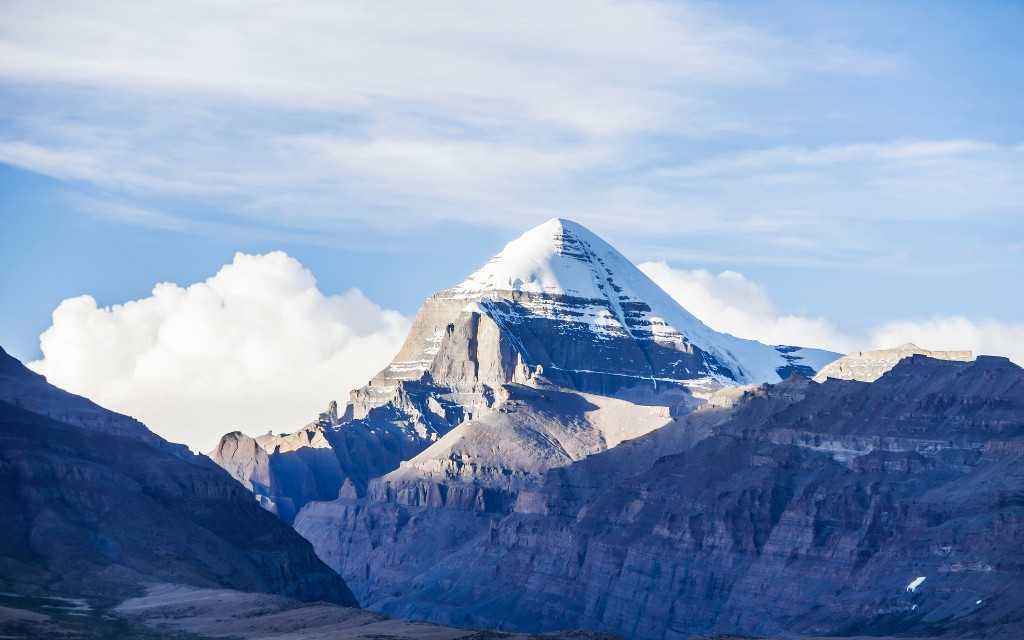
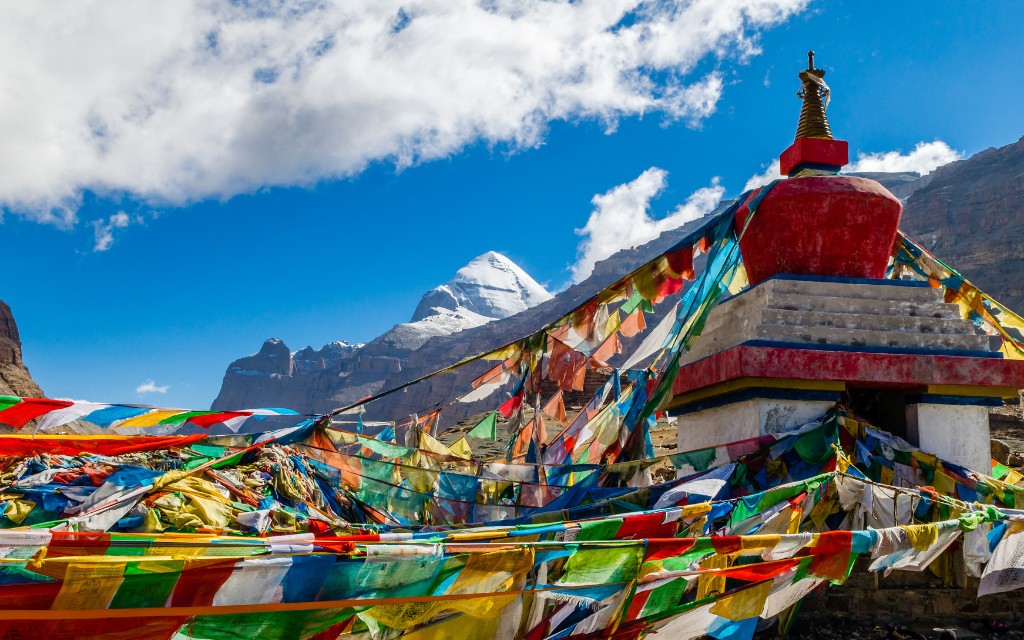
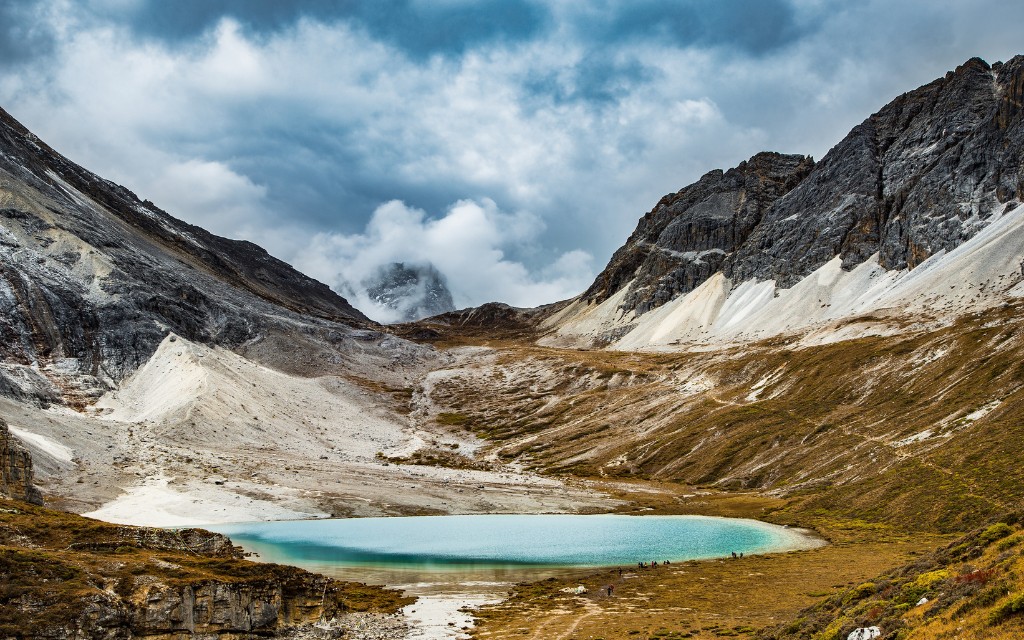
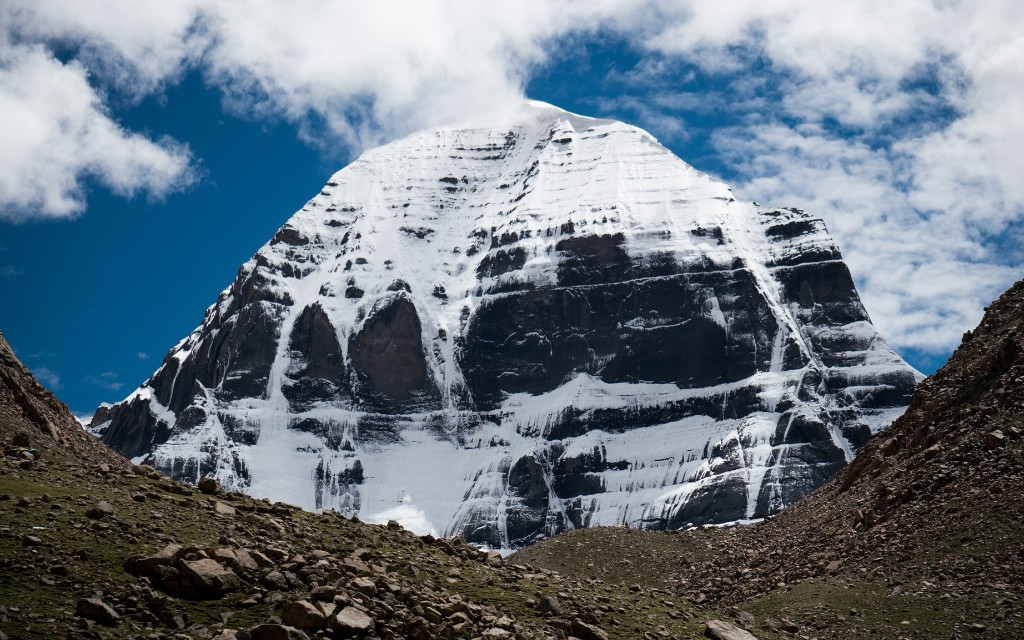
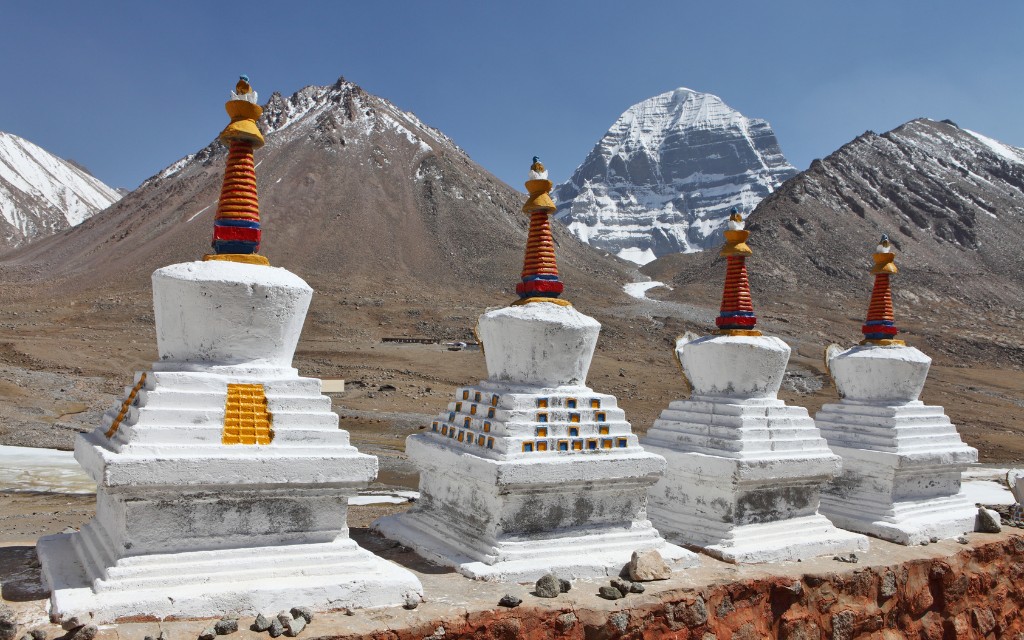


Kailash Mansarovar Tour by Overland is a life-changing, one of the most fascinating adventures in the Tibetan landscapes, which traverses through some of Tibet’s most spiritual regions and untouched Himalayan wilderness to Mt. Kailash, believed to be one of the holiest mountains in South Asia, believed to be the abode of one of the supreme lords of Hindus-Shiva. Mt. Kailash is thus believed to be the land of Lord Shiva, full of natural beauty and richness in culture, with deep spiritual energies in serenity.
Situated in the western Himalaya ranges of Tibetan autonomous region of China, Mount Kailash is considered as the land of almighty lord Shiva. Kailash Mansarovar Yatrs is the most life-changing adventure into the Tibetan Landscapes, which will be passing through some of the spiritual and untouched regions of Tibet. This diamond-shaped mount Kailash 6,638 meters tall, and the largest freshwater lake Mansarovar emanate great energy and mental peace place for mankind. The Kailash Mansarovar Yatra is a kind of spiritual tour taken to the holiest Mount Kailash and Lake Mansarovar situated in Tibet. This journey is of utmost importance to Hindus, Buddhists, Jains, and the adherents of Bon.
Kailash Mansarovar Yatra starts from Kathmandu, as a number of pilgrims arrive in the capital of Nepal. The initial days are utilized in preparations for the tour, including medical checkups, obtaining permits, and attending briefings on traveling at high altitudes. Pilgrims visit local temples in Kathmandu, like the Pashupatinath Temple, to take blessings for the sacred tour. Now, the group proceeds from Kathmandu by road to the Nepal-Tibet border at Kyirong and crosses over to Tibet, where the real adventure begins.
After acclimatization in Kyirong, the pilgrimage moves toward Lake Mansarovar, passing through Tibetan landscapes. A holy dip in the lake is the spiritual high point of the pilgrims, who will spend one night on its serene banks. The journey proceeds further to Darchen, which serves as the base camp for Mount Kailash. Afterward, the pilgrims begin a 3-day parikrama on foot of the holy mountain-to be done around the base through miles of rugged and exhausting terrain. This includes trekking across the most difficult part of this yatra: the Drolma La Pass, which is at 5,600 meters.
The last leg of this journey follows the route back to Kathmandu via Kyirong. After performing parikrama and the return comes from the Tibetan side, the pilgrims contemplate great spiritual experiences both at Kailash and Mansarovar. The yatra concludes in Kathmandu with an overwhelming feeling of achievement, where pilgrims mostly take time to rest and visit local religious sites before returning home. Kailash Mansarovar Tour by Overland is a life-changing, one of the most fascinating adventures in the Tibetan landscapes, which traverses through some of Tibet’s most spiritual regions and untouched Himalayan wilderness to Mt. Kailash, believed to be one of the holiest mountains in South Asia, believed to be the abode of one of the supreme lords of Hindus-Shiva. Mt. Kailash is, therefore, Lord Shiva’s abode; full of natural beauty and richness in culture, with deep spiritual energies in serenity.
Kailash Full Moon Yatra was the holiest of all journeys as it changed to Mount Kailash and Lake Mansarovar, enriched with a confluence of the full moon. The period with the circulation of the full moon light round Mount Kailash eminently amplified the blessings to create a closer connection to divinity. Once-in-a-lifetime scenery would be at the time a full moon reflects in the sacred Lake Mansarovar, where it is believed that the celestial alignment boosts cleansing from all sins and brings in inner peace. This yatra is usually offered between May and September and has to be among the most sought-after journeys into the land of Tibet.
| Months | Full Moon Departure by Kathmandu 2026 |
| May | 05 May to 20 May |
| June | 03 June to 18 June |
| July | 29 June to 14 July |
| August | 31 July to 15 August |
| September | 30 August to 15 September |
| October | 30 September to 15 October |
Note: We will provide AHC machine during trek to update our clients health status timely. Which helps to find out our clients, the AHC smart couch enables objective information health data monitoring like measuring BP, Oxygen level, ECG, HR, RR, Temp, weight.
Arrive at Tribhuwan International Airport in Kathmandu. Our representative will meet you at the airport. After he/she will take you to the hotel.
Take your time to get yourself settled in and freshened up after the long flight. Later, a short meeting with a briefing on the Kailash Mansarovar Yatra tour will be done. The evening is at leisure. One of our representatives will take you to a welcome dinner at one of the finest restaurants. Stay overnight in Kathmandu.
After having breakfast, your Kathmandu Valley sightseeing will start with the pick-up by your tour guide. You will be taken to see the popular Hindu temple of Pashupatinath and many other pilgrimize sites.
From Pashupatinath, we drive to Guhyeshwari, Boudhanath (which is the largest Buddhist stupa and a UNESCO World Heritage Site), and finally the sleeping statue of lord Vishnu. Then, we will drive back to the hotel for lunch.
After lunch, you do the final preparation for Kailash Mansarovar Yatra. Later, you will have free time to explore the area at your own pace before being transported back to your hotel.
Note: Morning we collect Passport & apply for China Visa at Kathmandu Chinese Embassy.
Early in the morning, after having breakfast, the tour begins to Syabrubesi. During driving, the tourists drive through countryside roads and enjoy magnificent views of lush green hills, terraced farmlands, and small villages that are nestled in the foothills of the Himalayas. As it leaves the hustle and bustle of Kathmandu Valley, the scenery changes into more rugged and mountainous landscape.
The highway meanders through dense forests and by the side of rivers, presenting picture-postcard scenery, especially in the Langtang National Park region. You will also pass towns, which include Trishuli Bazaar and Dhunche, with sight-catching glimpses of the locals’ way of life and traditional Nepali culture.
Arriving at Syabrubesi-a small village near the Nepal-Tibet border-you check into the guesthouse or hotel. You will find Syabrubesi as an important stopover point before you enter Tibet. It’s also a popular starting point for treks in the Langtang region.
The evening will be free, relaxing and enjoying the fresh mountain air in preparation for the next leg of the journey towards the Tibetan border. Sleep well tonight, as higher altitudes are in store for you over the coming days.
After breakfast, you will drive to the Nepal Tibet border at Rasuwagadhi. You take a rather short drive to the border but the views of the valleys and hills around you are nothing but spectacular. Arrive at the border in Rasuwagadhi, where you will go through immigration and customs formalities to enter Tibet.
Once you cross the border, you will be officially in the Tibetan Autonomous Region of China. After the formalities are finished, your Tibetan guide will greet you, followed by driving all the way to Kyirong, also known as Gyirong. The road from the border onwards to Kyirong is very fine, and it runs by deep gorges, cascading waterfalls, and even snow-capped peaks far away.
Kyirong is considered the “Valley of Happiness,” with a very picturesque town in Tibet, having quite a moderate climate compared to other parts. This stop is very relevant to acclimatization, preparing your system for the heights ahead.
Upon arrival in Kyirong, check-in to the hotel, with the remaining part of the day at leisure. This will be compulsory rest for your body to get acclimatized to the increased altitude. Take short walks around town, explore the local culture, and enjoy the serene surroundings.
Rest at Kyirong for acclimatization purposes to go high up. This is an important rest day to get your body used to the thinner air at a higher altitude with lower oxygen levels. However, as this day has been kept for rest, some easy walks can be taken around the silent town to watch the beautiful Himalayas and lush green surroundings. Kyirong, also known as the “Valley of Happiness,” is a very quiet city with serene landscapes; this makes it an ideal spot to recover and get ready for the journey ahead. In the evening, you will be back at your hotel for rest.
On Day 6, after breakfast, you will begin the drive from Kyirong to Saga, a significant stop on the Kailash Mansarovar Yatra. The journey takes you through the stunning Tibetan plateau, offering breathtaking views of snow-capped mountains, expansive valleys, and serene landscapes. Along the way, you’ll pass through small Tibetan villages, rivers, and pasture lands where nomadic herders tend to their yaks and sheep.
As you gain altitude, the terrain becomes more rugged, but the scenic beauty is ever-present, with occasional sightings of wildlife such as Tibetan antelopes and wild yaks. The drive is a mixture of smooth roads and occasional rough patches, but it is a rewarding experience for the adventurous pilgrim.
Upon reaching Saga, a small yet important town in Tibet, you’ll check into your guesthouse. Saga serves as a key acclimatization point before heading toward Lake Mansarovar. You’ll have time to rest and recover from the journey, preparing for the next day’s long drive to the sacred lake.
Early in the morning, take a very long and scenic drive from Saga to sacred Lake Mansarovar via vast and breathtaking Tibetan plateau. Stunning views of the majestic Himalayas, pristine lakes, and far-flung Tibetan settlements. The closer you get to Lake Mansarovar, the spiritual scenery will catch your eyes: the towering peak of Mt. Kailash looming ahead.
You will reach Mayum La Pass-5,200 m, one of the highest points of this journey, which provides great panoramic views. After hours of driving, having the first glimpse of the holy Lake Mansarovar is something of deep emotion for many pilgrims. Arriving at the lake, you may have a holy dip into its crystal clear water believed to wash away your sins and bring peace to your mind.
Many pilgrims perform rituals and say prayers at the lake, reflecting on the spiritual journey. You will then proceed to a nearby guesthouse to rest in preparation for the following days of parikrama around Mount Kailash.
On Day 8, after spending the morning at Lake Mansarovar, you will have the opportunity to take part in a holy puja (worship) and other rituals by the lake, which holds immense spiritual significance for both Hindus and Buddhists. The serene atmosphere and the majestic views of Mount Kailash reflecting on the lake’s surface make this a deeply spiritual experience for pilgrims.
Afterward, you will drive a short distance to Darchen, a small town located at the base of Mount Kailash. Darchen is the starting point for the Mount Kailash parikrama (circumambulation) and serves as the final stop for pilgrims before embarking on this sacred trek. Upon arrival, you’ll have time to rest, acclimatize further, and make any final preparations for the challenging but rewarding journey around Mount Kailash.
The afternoon is free for personal reflection or light exploration around Darchen. In the evening, you’ll have a detailed briefing about the upcoming parikrama, including the route, altitude challenges, and what to expect over the next few days.
Day 9 will begin the long-awaited Kailash Parikrama (Circumnavigation) of Mount Kailash. Right after an early breakfast in Darchen, you will depart on foot toward the trek to Dirapuk, at 4,900 meters altitude.
It is about a 13km trek from Darchen to Dirapuk, which normally would take around 6-7 hours. The trail is on the relatively flat grounds of the valley floor, which presents a breathtaking view of the northern face of Mount Kailash. Generally, this is considered the most sacred and awe-inspiring view of Mount Kailash. You will pass through beautiful high-altitude meadows and a few Tibetan settlements-opportunities to absorb yourself in the spiritual atmosphere of the surroundings.
Along the way, you meet fellow pilgrims who walk personal causes and spiritual purposes. The trek is highly challenging since one needs to get accustomed to the high altitude, and so pacing oneself, hydrating one’s self is very important.
At Dirapuk, you check into a guesthouse or set up your camp upon arrival. The atmosphere is tranquil and the area around Dirapuk has spectacular views of the mountain. This place is perfectly suggested for quiet thoughts and meditation in preparation for the heavier sections of parikrama over the next couple of days.
On the 10th day, you will continue your further Kailash parikrama, which will be the most challenging and breathtaking part of the journey. Having had an early breakfast, you head on with the trek from Dirapuk to Zuthulphuk via Drolma La Pass-the highest altitude of 5,645 meters.
It begins with a steep climb towards Drolma La, the highest point of the parikrama. Thus, the trail is strenuous and the air thin, while the terrain is rugged. As you reach the top of the pass, you will encounter breathtaking views from the four directions in the form of surrounding mountains and glaciers. Pilgrims often stop for a moment of prayers here and leave offerings as they seek spiritual blessings.
After crossing the pass, it would be time to begin the descent toward Zuthulphuk. Parts of the trail are on rocky paths, with other parts set on gentle slopes. The views are outstanding toward the Tibetan plateau and surrounding landscape. Though physically exhausting, the trek is exhilaratingly worthy with stunning natural beauty and spiritual significance.
You will reach Zuthulphuk, where you would be staying in low-budget guesthouses or tents. Overnight stay at Zuthulphuk helps you relive the day’s journey that you had and prepares you for the final leg of parikrama the next day.
On Day 11, you will complete the final leg of the Kailash parikrama by trekking from Zuthulphuk back to Darchen. After an early breakfast, you’ll start the relatively short trek to Darchen, which typically takes 3 to 4 hours.
The trail from Zuthulphuk to Darchen is a gradual descent through scenic landscapes, including lush valleys and small rivers. As you walk, you’ll be surrounded by the serene beauty of the Tibetan plateau, with the imposing presence of Mount Kailash in the distance.
Upon reaching Darchen, you can celebrate the completion of the parikrama, reflecting on the spiritual and physical challenges overcome during this sacred journey. This is also an opportunity to rest, recuperate, and enjoy a well-deserved meal at a local guesthouse.
In the evening, you’ll have time to relax and prepare for the journey back. The completion of the parikrama marks a significant spiritual achievement, and the sense of accomplishment and inner peace gained from the experience is profound.
It is on Day 12 that you will begin the return journey to Saga, after having breakfast at Darchen, via the same route by which you traveled earlier in this yatra. The distance between Darchen and Saga is quite long, about 450 kilometers, and the ride takes roughly 8-9 hours.
The road winds its way over the rugged Tibetan plateau affording breathtaking vistas across an open expanse of landscape with the majestic Himalayan range in the distance. En route, you will pass through picturesque Tibetan villages, wide expanses of grasslands, and the occasional river crossing. This is a time to reflect on the spiritual journey so far completed and to take in the remaining beauty of the Tibetan landscape.
You will rest in a guesthouse upon arrival in Saga to get some well-deserved rest from the long drive. Saga is at a lower altitude compared to the high reaches of Mount Kailash, and thus, it will be easier to stay there on your way down to the lower altitudes.
Evening: Dinner deservedly so and a time for rest, looking back to an incredible journey of experiences over the past days.
On Day 13, you will travel from Saga back to Kyirong. After breakfast, you’ll start the drive, which takes about 5 to 6 hours. The journey retraces your earlier route, offering a chance to appreciate the Tibetan landscape from a different perspective as you descend from the higher altitudes of Saga.
The drive features beautiful views of the Tibetan plateau, including rolling grasslands, rugged terrain, and traditional Tibetan villages. As you approach Kyirong, the landscape becomes more verdant and the air more breathable, making it a comfortable place to acclimate and relax after the high-altitude trek.
Upon reaching Kyirong, you’ll check into your hotel and have the rest of the day free to rest and recuperate. You can take a leisurely walk around the town, enjoy the tranquil environment, and reflect on your journey. Kyirong, often referred to as the “Valley of Happiness,” provides a peaceful setting to unwind before heading back to Nepal.
On Day 14, you will begin your journey back to Kathmandu from Kyirong. After breakfast, you’ll depart Kyirong and head towards the Nepal-Tibet border at Rasuwagadhi. The drive takes approximately 7 to 8 hours, covering the scenic route through the hills and valleys of Nepal.
Once you reach the border, you’ll complete the necessary immigration procedures to re-enter Nepal. After crossing the border, you will continue the drive to Kathmandu, retracing your route through picturesque landscapes and small villages.
Upon arrival in Kathmandu, you will check into your hotel and have the rest of the day at leisure. This is a perfect opportunity to relax, reflect on your pilgrimage, and enjoy the vibrant city after your high-altitude journey. You might choose to visit local markets, enjoy a meal, or simply rest after the long journey.
On Day 15, your journey concludes with a final day in Kathmandu. Depending on your flight schedule, you will have time for some last-minute shopping, sightseeing, or simply relaxing. If time permits, you might visit local attractions like Durbar Square, Garden of Dreams, or enjoy a final meal at one of the city’s renowned restaurants.
Our representative will assist with your transfer to the airport, ensuring you have all your belongings and travel documents in order. As you bid farewell to Kathmandu, you’ll carry with you the memories and spiritual fulfillment of the Kailash Mansarovar Yatra.
| Start | Finish | Availability | Price |
|---|
Enter a recent customer’s contact info and we’ll ask them to leave you a review.